
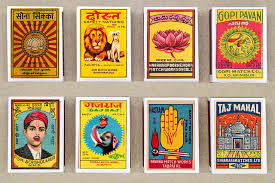
Look around your kitchen right now. Somewhere you will find a matchbox. And right next to it, almost certainly, a lighter. You never made a conscious decision to own both; they just exist together with you. That small, unconsidered coexistence is actually a live economics lesson hiding in plain sight.
The matchbox is as close to a pure commodity as a manufactured good can get. Nobody has a favourite brand. Nobody compares options before buying. You pick up whichever box is nearest, pay ₹2–3, and forget about it immediately. This is what economists call a market with near-zero pricing power, where producers cannot charge more without losing customers instantly, because the product is completely interchangeable and substitutes are everywhere.
And yet, the matchbox dominated Indian households for over a century, largely through one company — WIMCO (The Western India Match Company) which controlled supply and distribution across the country in a near-monopoly that textbooks would neatly classify then move on from. The real story is messier and more interesting: WIMCO didn’t fall to regulation or a government takeover. It was slowly, quietly defeated by a ₹10 plastic lighter.
That lighter is the matchbox’s greatest economic nemesis. It is a classic case of a substitute good so superior in convenience that it should have made matchboxes extinct by now. And yet the matchbox survives. It lights the morning agarbatti, sparks the kitchen stove during a gas hiccup, lights candles and so on.
This is behavioural economics at its most human. Habit, ritual, and familiarity keep economically “weaker” products alive long past the point rational theory would predict their death.
There is also a geography lesson buried inside that small cardboard box. Nearly 80% of India’s matches come from Sivakasi, Tamil Nadu. It’s a single town that built an entire industrial identity around matches, fireworks, and printing. It is a textbook case of economic clustering, where production concentrates in one place and an entire community’s livelihood depends on a product that costs less than a samosa.
And the price? A matchbox cost ₹1 in the 1990s. It costs ₹2–3 today. In a country where almost everything else has tripled or quadrupled in price, this near-stagnation is extraordinary. Producers have quietly absorbed decades of cost increases because they cannot pass them on. The moment the price rises meaningfully, consumers switch to a lighter and never look back. That is the brutal arithmetic of high price elasticity.
The matchbox does not ask to be noticed. It never has. But inside that small, unremarkable box is an entire economic biography of monopoly and slow decline, of a town built on an industry fading away, of a price that defied inflation, and of a product that logic says should be gone, but habit keeps alive.
“The matchbox did not survive the modern economy by being better. It survived by being familiar. In economics, familiarity is often worth more than efficiency.”
Recent Comments