
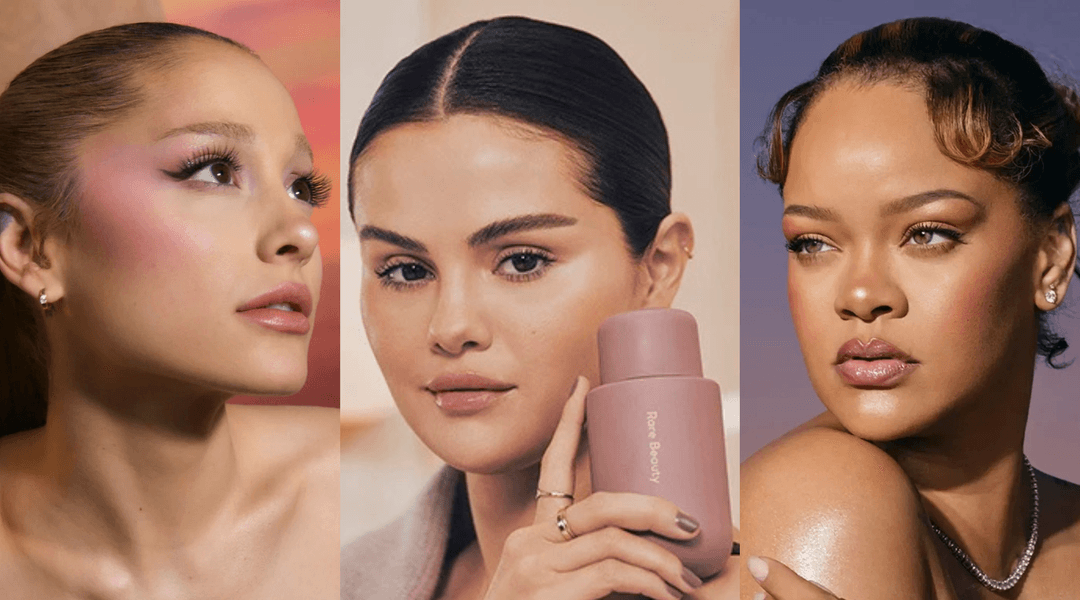
From Rihanna’s Fenty Beauty to Selena Gomez’s Rare Beauty, the world’s most influential beauty powerhouses are setting their sights on India’s luxury beauty market, and for compelling reasons. With a rapidly growing cohort of digitally savvy, skincare-conscious Gen Z and Alpha consumers, India is no longer simply an emerging market; it is swiftly becoming one of the most coveted beauty destinations on the global stage.
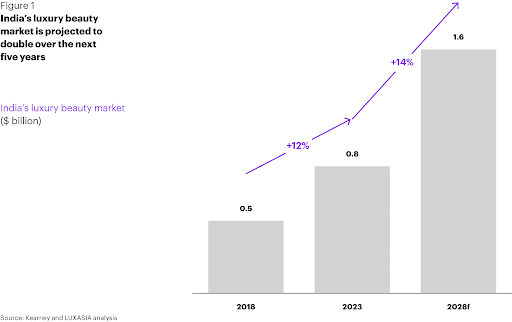
Already a billion-dollar industry in 2026, India’s luxury beauty sector is projected to reach $1.6 billion by 2028 and an ambitious $4 billion by 2035, growing at a striking 14 percent CAGR. For a country where luxury beauty currently holds just 4 percent of the overall beauty market, compared to 35–50 percent in mature economies like the US, UK, Japan, and South Korea, the growth runway is nothing short of extraordinary.
Why International Brands Are Eager to Enter India
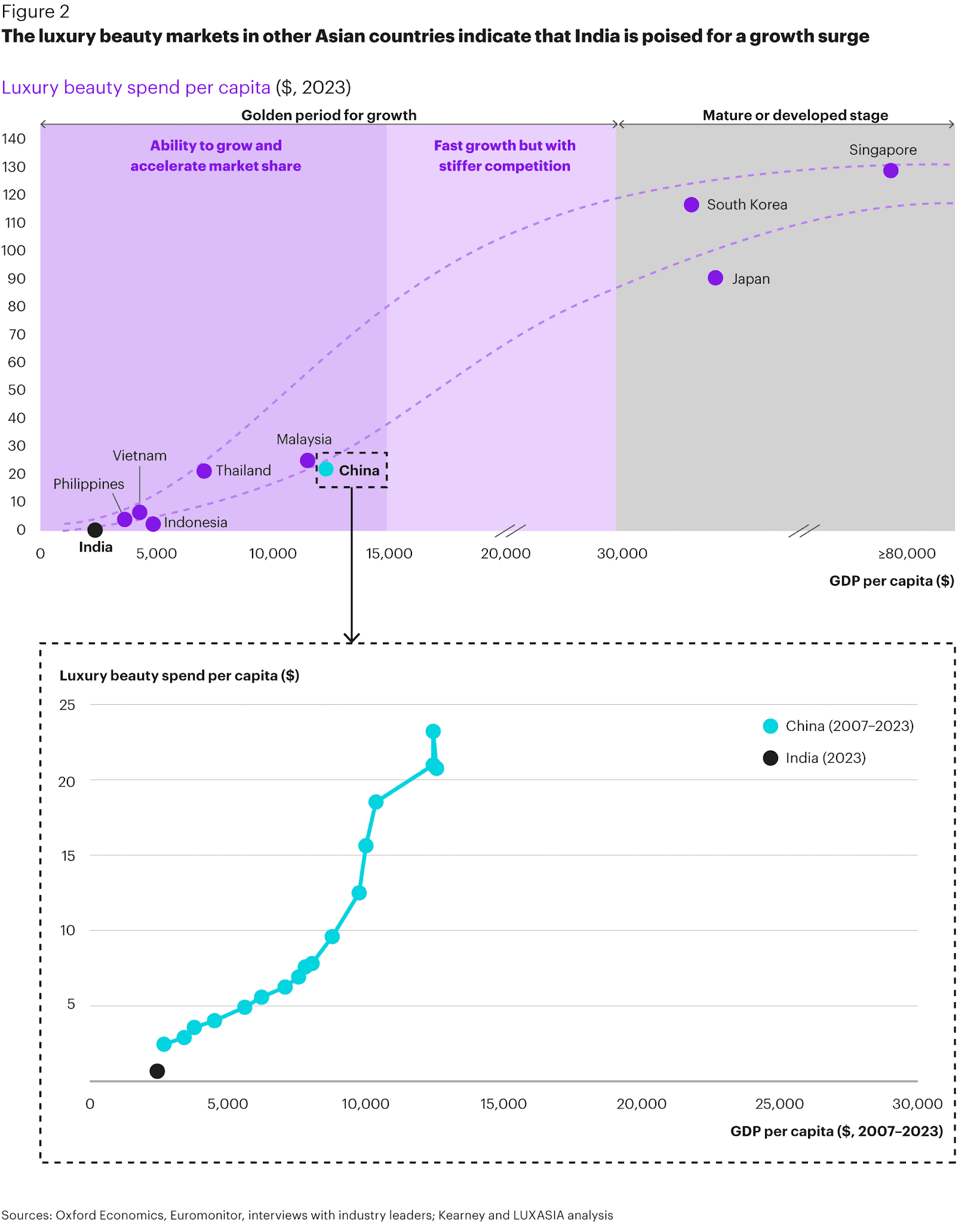
An analysis of major Asian markets suggests that India’s luxury beauty sector will follow an S-curve growth trajectory as income levels rise, generating a new wave of aspirational consumers with real spending power.
Another macroeconomic factor: affluence is expected to surge considerably over the next five to ten years, with the number of high-income households projected to triple, fuelling demand across all luxury beauty categories.
It is worth noting that India has also been used as a clearance market for overstocked or near-obsolete products from developed markets, typically sold through unauthorised online sellers at discounted prices and often without printed expiration dates. This practice has adversely affected brand perception and the overall consumer experience. However, the commercial viability of such platforms does confirm the existence of strong underlying demand for luxury beauty in India, even for brands that have yet to establish an official presence.
Forces that are Reshaping the Market
1. The Rise of the Well-Informed, Discerning Indian Consumer
A 2023 Meta-GWI survey revealed that 47 percent of Indian consumers discover beauty products through Instagram Reels, and 70 percent of beauty content viewers follow local influencers to guide their purchase decisions. Recognising this shift, brands such as Benefit, Caudalie, Estée Lauder, Farmacy, and Charlotte Tilbury are actively partnering with Indian influencers to engage this growing audience.
2. Increasingly Sophisticated Skincare Routines
Indian consumers are expanding their beauty regimens beyond traditional products such as cleansers and moisturisers to incorporate toners, sunscreens, and targeted treatments. Korean beauty has been particularly influential in this evolution. According to Nykaa’s Q2 FY24 earnings call, searches for “Korean sunscreen” and “glass skin” surged by 148 percent and 61 percent, respectively, in the October–December 2023 quarter.
3. The Rise of Celebrity-Led Beauty Brands:
Global names such as Rare Beauty by Selena Gomez and Fenty Beauty by Rihanna, alongside Indian celebrity brands such as Hyphen by Kriti Sanon and Anomaly Haircare by Priyanka Chopra, have made a significant cultural impact. Among the most successful is Katrina Kaif’s Kay Beauty, which achieved an annual revenue run-rate of $18 million within just four years of its launch.
4. Omnichannel Distribution as the New Standard
Nykaa, the dominant force in online luxury beauty retail, is actively expanding its physical store network to achieve an optimal offline-online balance. Meanwhile, Sephora is scaling its store footprint, while Reliance’s Tira is pursuing an ambitious 100-store physical presence, complemented by a robust digital offering, to create a seamless consumer journey.
Challenges International Brands Face in India
Shade Inclusivity and Skin Tone Representation
One of the well-documented and consistent complaints is the lack of shade range that international brands provide for the Indian market. Typically, only a few curated colours are available.
Darker, deeper skin tones are underserved
Beyond shade depth, undertone nuance remains a critical gap: Indian skin tones demand a far greater emphasis on golden, olive and yellow undertones which many international brands have yet to fully incorporate.
Formulation and Climate Compatibility
India’s vast geography gives rise to an equally diverse range of climatic conditions, from Delhi’s arid dust to Chennai’s intense humidity. Western skincare formulations, largely developed for temperate climates, frequently fail to perform adequately across this spectrum. Heavy moisturisers that feel indulgent in a New York winter become greasy and uncomfortable in tropical heat. Matte lipstick formulas engineered for European conditions may crack or fade in Delhi’s dry winters.
The fundamental challenge is that most international skincare brands simply extend their global bestsellers to India, without considering the specific needs of Indian skin types or climatic conditions.
What Brands Need To Win In Market
Brands should focus on three strategic pillars :
- Deep cultural understanding,
- Product localisation
- Intelligent distribution.
Conclusion
India’s luxury beauty market represents one of the most compelling growth opportunities in the global industry today. With its vast and youthful consumer base, rapidly rising affluence, and appetite for international brands and sophisticated beauty rituals, India is poised to transition from a nascent market to a global powerhouse over the next decade.
Shade inclusivity, climate-adapted formulations, and culturally resonant brand narratives are not optional enhancements; they are the foundation of long-term relevance in this market. As competition intensifies and domestic brands grow stronger, international beauty brands must act with urgency, empathy, and localised strategy.
References
India’s massive untapped growth opportunity in luxury beauty | Kearney https://share.google/8op10unLxJUdFZZy7
Recent Comments